
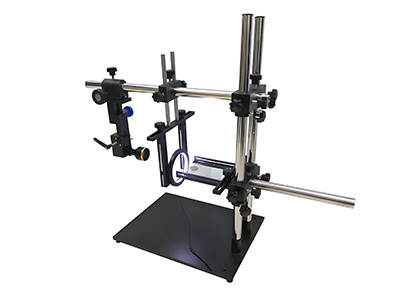
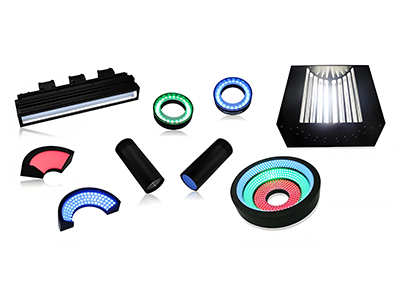
Imagine you want to take a clear photo with your phone, but the room is too dark, or the sunlight is too harsh, and it is either dark or too bright to see - this is "not well lit".
Visual inspection is like taking pictures of parts in the factory to find problems, and optical solutions are tools to help the machine "adjust the light". It determines whether the machine can "see clearly and accurately".


Choose the right "flashlight": For example, to check for scratches on the screen of your mobile phone, use the light on the side (like using a flashlight to shine diagonally on the desktop, the dust is more obvious).
The secret to "non-reflective": When inspecting shiny metal, use special light (such as polarized light), just like wearing sunglasses to look at the water, the reflection becomes less.
Block out "stray light": Block out unwanted light with a filter (like a red filter), like drawing curtains at night to make the room darker.
High-speed photos are not blurry: When checking the beverage bottles on the assembly line, use a flash-like "strobe" (one on and one on), even if the bottle is moving, the photo is not blurry.
Time-saving: If the lighting is adjusted well, the computer can directly judge whether it is "qualified" or "unqualified" without spending time retouching the picture.
Look at things that are invisible to the naked eye: for example, if you shine UV light on a medicine bottle, if it leaks, the glue will glow (like writing with invisible ink).
Look at the three-dimensional shape: use a laser line to shine on the object, and calculate the height through line deformation (such as checking whether the car parts are flat).
Complex environments are not afraid: detecting in outdoor sunlight can be done with particularly bright light + filters, just like looking at your phone with an umbrella in the sun
Supermarket code scanner: Why is barcode scanning fast and accurate? Because its red light can be directed at the black and white strips, other light is filtered out.
Mobile phone face unlocking: Some mobile phones use infrared light (invisible to the human eye) to recognize your face in the dark.
Vending machine: The pattern on the coin is illuminated with a specific light, and the machine knows whether it is true or false.
The core goal: use the right light to "highlight" what is to be detected, so that the machine can see it at a glance.
Key principle: use different tools for different problems (e.g. edge light for scratches, colored light for color).
Effect: Fast and accurate, not easy to make mistakes